What is LEO?
LLM Engine Optimization (LEO) is the practice of optimizing your brand and content to become the preferred answer in AI platforms like ChatGPT, Perplexity, Claude, and Google’s AI Mode. It’s not just traditional SEO – it’s about relevance engineering for the AI-driven search ecosystem.
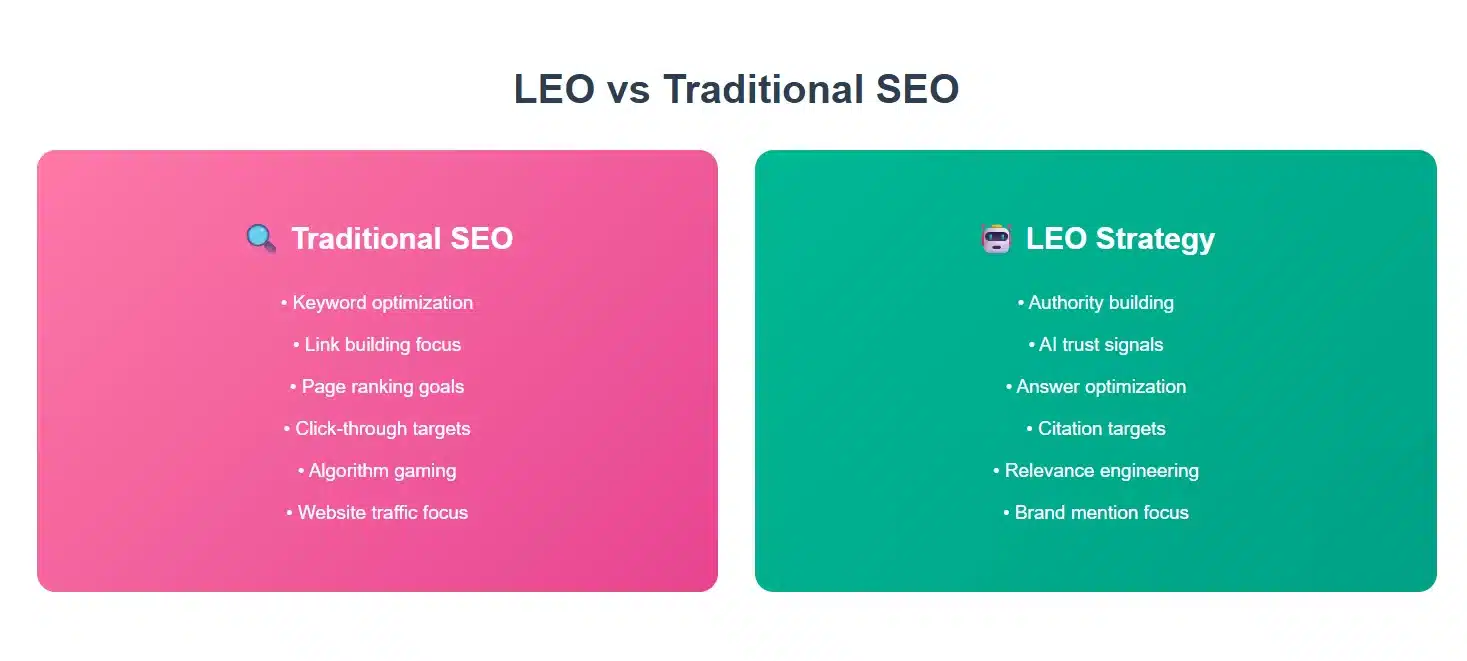
Core LEO Strategy Framework
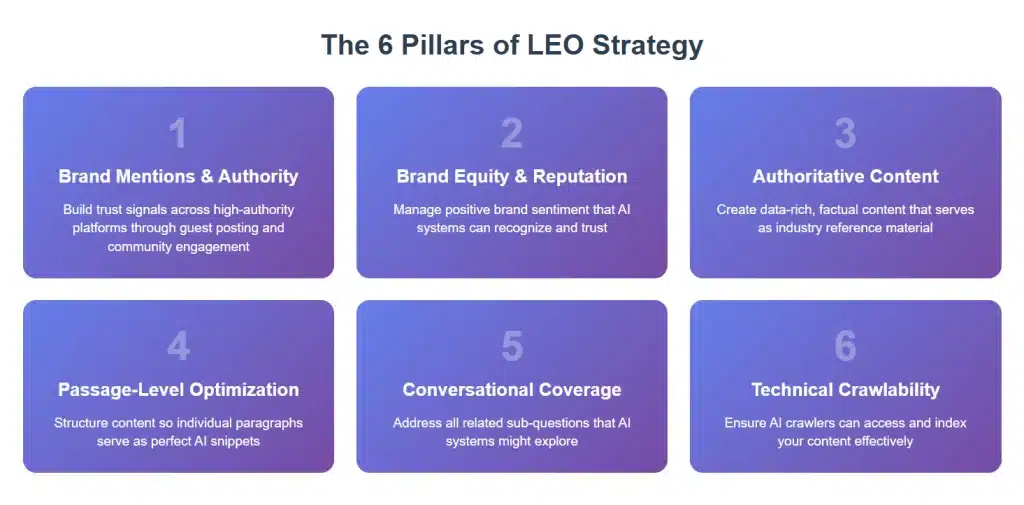
1. Brand Mentions & Authority Building
Objective: Increase brand mentions across high-authority platforms to build AI trust signals
Key Activities:
- Guest posting on industry publications
- Contributing to high-authority websites
- Participating in relevant forums and Reddit discussions
- Getting featured in news outlets
- Building authentic user-generated content (UGC)
2. Brand Equity & Reputation Management
Objective: Build positive brand sentiment that AI systems can recognize and trust
Key Activities:
- Monitor and respond to all reviews across platforms
- Track brand mentions and sentiment
- Build positive reputation through community engagement
- Address negative feedback proactively
3. Authoritative Content Creation
Objective: Become the reference source for your industry topics
Key Activities:
- Create data-rich, factual content
- Maintain neutral, authoritative tone
- Regular content updates with fresh data
- Back up claims with credible sources and statistics
- Avoid personal anecdotes in favor of objective information
4. Passage-Level Optimization
Objective: Structure content so individual paragraphs can serve as perfect AI snippets
Key Activities:
- Write concise, standalone paragraphs
- Include direct answers to specific questions
- Use clear subheadings for topic segmentation
- Implement structured data (schema markup)
- Avoid burying key insights in long text blocks
5. Conversational Coverage
Objective: Cover all related sub-questions that LLMs might explore
Key Activities:
- Research and answer related sub-questions
- Create comprehensive FAQ sections
- Develop supporting pages for each sub-topic
- Build internal linking between related topics
- Monitor emerging questions in forums and social media
6. Technical Crawlability
Objective: Ensure AI crawlers can access and index your content
Key Activities:
- Optimize robots.txt for AI crawlers (GPTBot, BingBot)
- Maintain fast page loading speeds
- Submit comprehensive XML sitemaps
- Use clean, semantic HTML structure
- Monitor server logs for AI crawler activity
LEO SEO Checklist
Initial Audit Phase
- Conduct current LLM visibility audit across ChatGPT, Perplexity, Claude
- Analyze competitor presence in AI answers
- Identify content and prompt gaps
- Assess technical crawlability issues
- Review current brand mention landscape
- Evaluate existing content authority and data richness
Content Optimization
- Rewrite key pages with passage-level optimization
- Add structured data markup to all relevant pages
- Create FAQ sections addressing sub-questions
- Update content with latest data and statistics
- Implement neutral, authoritative tone across all content
- Add proper citations and source links
- Create topic clusters with internal linking
Technical Setup
- Configure robots.txt to allow AI crawlers
- Optimize Cloudflare settings for AI access
- Submit updated XML sitemaps
- Improve page loading speeds (target <3 seconds)
- Implement clean HTML structure
- Set up server log monitoring for AI crawlers
Brand Building
- Identify target high-authority publications for guest posting
- Create list of relevant forums and communities
- Set up brand mention monitoring tools
- Develop review response strategy
- Create authentic UGC acquisition plan
- Build relationships with industry journalists
Monitoring & Analytics
- Set up LLM visibility tracking
- Monitor brand sentiment across platforms
- Track AI crawler activity in server logs
- Measure traffic from AI platforms
- Monitor competitor AI presence
- Track question trends in target communities
- Also See this The Ultimate SEO Checklist : A Guide for CMOs and Digital Marketing Leaders
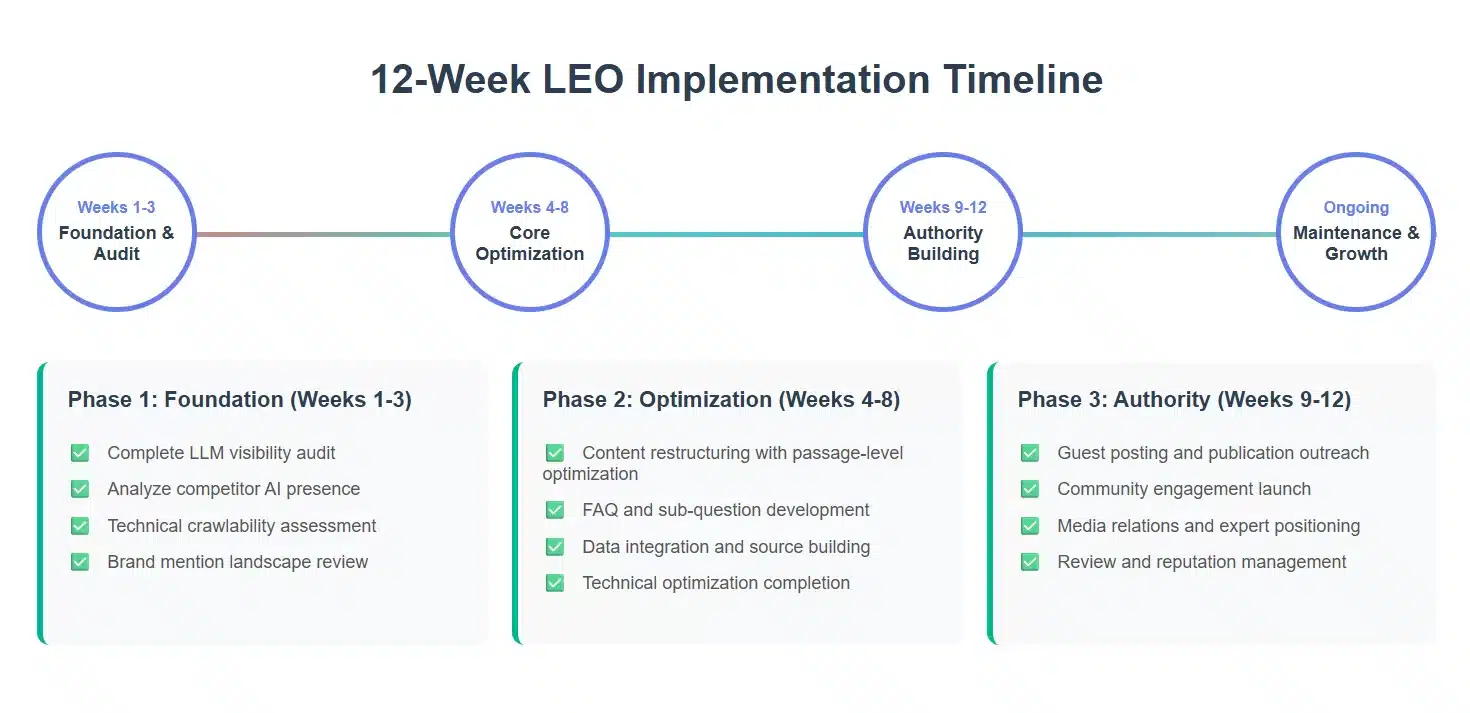
Weekly Activity Plan
Week 1: Foundation & Audit
Monday: Complete LLM visibility audit Tuesday: Analyze competitor AI presence Wednesday: Technical crawlability assessment Thursday: Brand mention landscape review Friday: Create 90-day optimization roadmap
Week 2: Technical Optimization
Monday: Configure robots.txt and Cloudflare settings Tuesday: Optimize page speeds and HTML structure Wednesday: Implement structured data markup Thursday: Submit XML sitemaps Friday: Set up crawler monitoring
Week 3: Content Restructuring
Monday: Rewrite homepage with passage-level optimization Tuesday: Optimize 5 key product/service pages Wednesday: Create comprehensive FAQ section Thursday: Add data and statistics to existing content Friday: Implement topic clustering and internal linking
Week 4: Brand Building Launch
Monday: Identify and reach out to 5 guest posting opportunities Tuesday: Join 3 relevant industry forums/communities Wednesday: Create and share valuable content in target communities Thursday: Respond to all recent reviews and mentions Friday: Set up ongoing brand monitoring
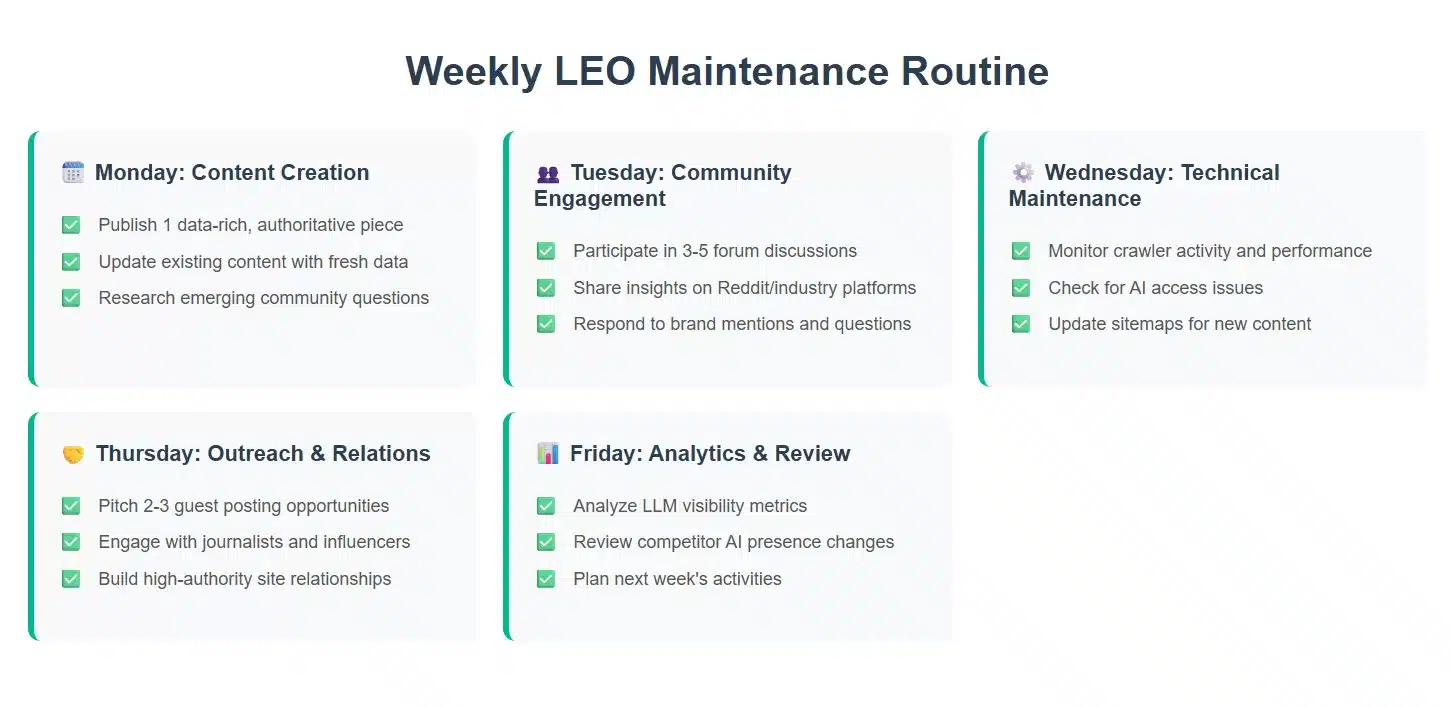
Ongoing Weekly Routine (Weeks 5+)
Monday: Content Creation & Updates
- Publish 1 data-rich, authoritative piece of content
- Update existing content with fresh statistics
- Research emerging questions in target communities
Tuesday: Community Engagement
- Participate in 3-5 relevant forum discussions
- Share valuable insights on Reddit/industry platforms
- Respond to brand mentions and questions
Wednesday: Technical Maintenance
- Monitor crawler activity and site performance
- Check for technical issues affecting AI access
- Update sitemaps if new content published
Thursday: Outreach & Relationship Building
- Pitch 2-3 guest posting opportunities
- Engage with industry journalists and influencers
- Build relationships with high-authority site owners
Friday: Analytics & Strategy Review
- Analyze LLM visibility metrics
- Review competitor AI presence changes
- Track traffic from AI platforms
- Plan next week’s activities based on performance
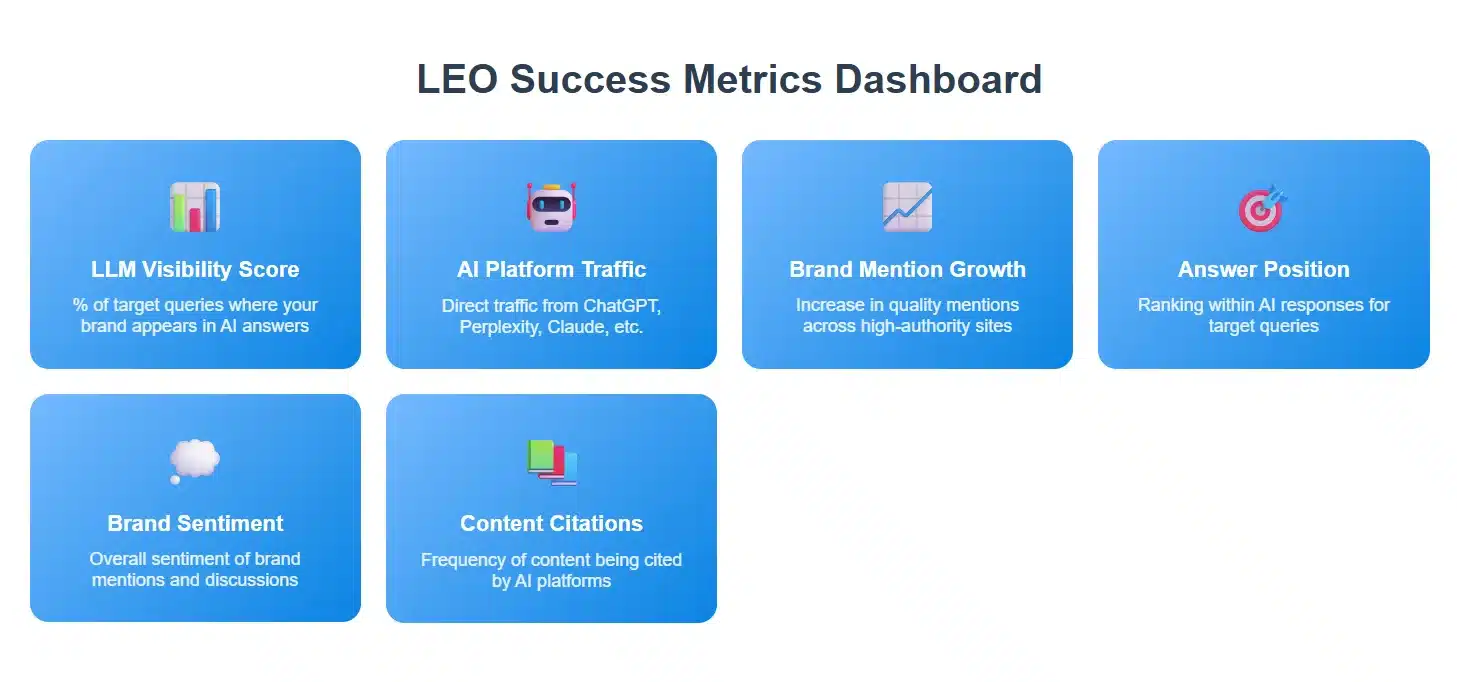
Key Metrics to Track
Primary Metrics
- LLM Visibility Score: Percentage of target queries where your brand appears in AI answers
- AI Platform Traffic: Direct traffic from ChatGPT, Perplexity, Claude, etc.
- Brand Mention Growth: Increase in quality mentions across high-authority sites
- Answer Position: Ranking within AI responses for target queries
Secondary Metrics
- Brand Sentiment Score: Overall sentiment of brand mentions
- Technical Crawl Success: AI crawler access and indexing rates
- Content Citation Rate: Frequency of content being cited by AI platforms
- Topic Coverage Score: Percentage of related sub-questions addressed
Recommended Tools
LLM Monitoring
- Mentions.so (for AI visibility tracking)
- Brand24 (brand mention monitoring)
- Google Alerts (basic mention tracking)
Content Research
- AlsoAsked (related question research)
- Semrush (keyword and question research)
- AnswerThePublic (question discovery)
Technical Monitoring
- Google Search Console (crawler activity)
- Screaming Frog (technical SEO audit)
- GTmetrix (page speed monitoring)
Quick Start Action Items
- Week 1: Set up monitoring tools and complete initial audit
- Week 2: Fix technical crawlability issues
- Week 3: Optimize your top 10 most important pages for passage-level SEO
- Week 4: Begin brand building activities in 3 target communities
- Month 2: Scale content creation and community engagement
- Month 3: Analyze results and refine strategy based on performance
Remember: LEO is about becoming the trusted, authoritative source that AI systems naturally want to cite. Focus on building genuine expertise and authority rather than trying to game the system.
Also read : LEO Content Optimization Techniques: Complete Guide